.webp)
How to Master It Takes Two: A Complete Co-op Guide to Puzzles, Bosses, and Teamwork
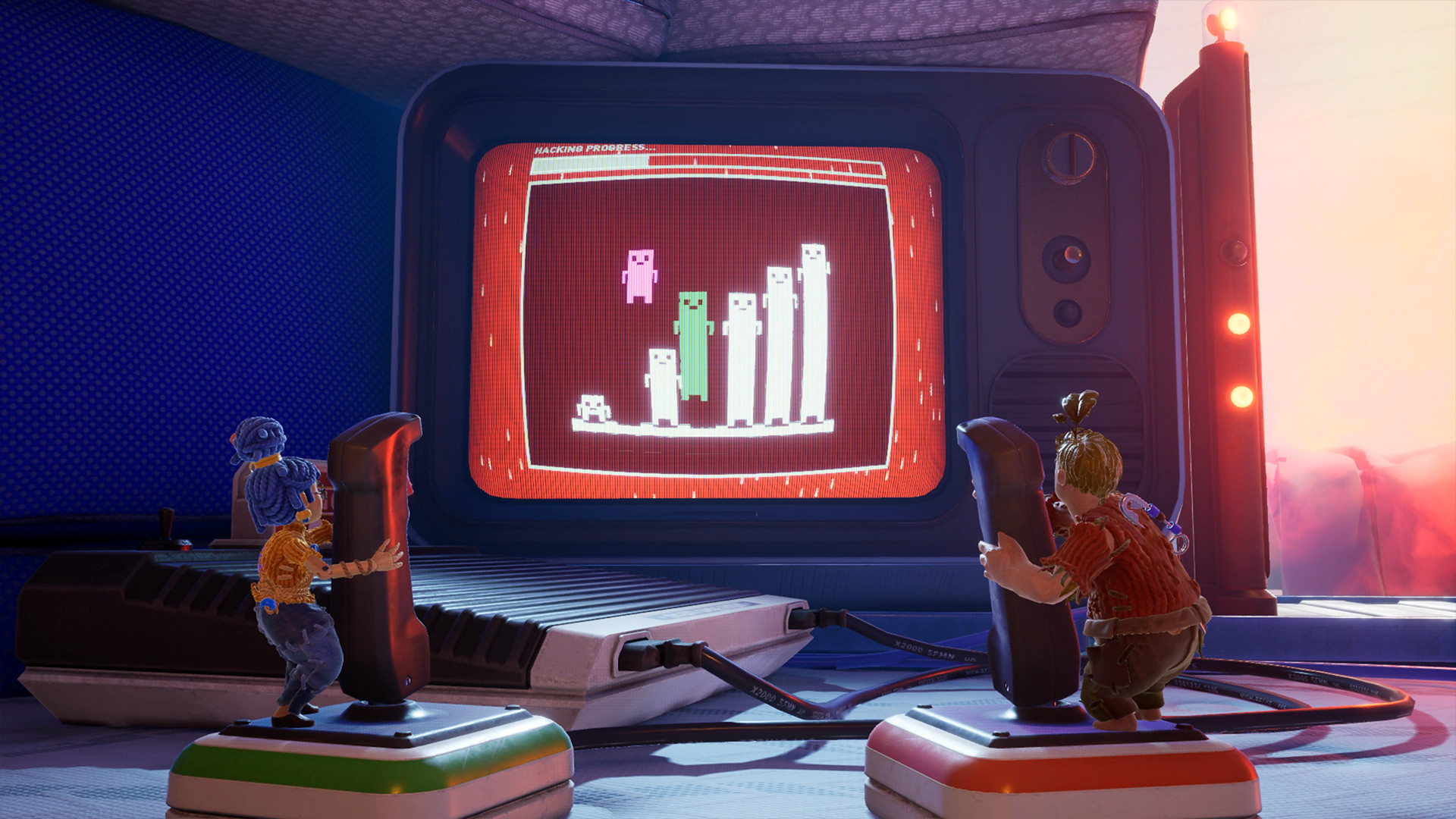
It Takes Two is a cooperative action-adventure game developed by Hazelight Studios and published by Electronic Arts. Designed specifically for two players, the game follows Cody and May, a married couple who have been transformed into tiny dolls while facing difficulties in their relationship. With help from the unusual Dr. Hakim, they must work together to overcome obstacles, solve puzzles, defeat enemies, and find their way back to their human bodies.
What makes It Takes Two different from many other adventure games is that cooperation is not simply an optional feature. Almost every major challenge requires both players to contribute. One character might control a special ability while the other operates a mechanism, or one player might create a path that allows the other to reach a distant platform. Progress depends on communication, timing, experimentation, and a willingness to help your partner.
For beginners, the variety of mechanics can initially feel overwhelming. Each chapter introduces new environments, abilities, puzzles, and enemies, so a strategy that works in one area may not work in the next. The best way to approach the game is to understand the fundamentals, communicate consistently, experiment with new abilities, and learn how to coordinate movements during challenging encounters.
This guide explains how to play It Takes Two efficiently, from the first moments in the garden to the later chapters and final challenges. You will learn how to solve cooperative puzzles, master platforming, defeat bosses, discover minigames, use character abilities, and make the most of the two-player experience.
1. How to Start It Takes Two and Understand the Basics

The first step toward mastering It Takes Two is understanding how the game expects you to cooperate. Cody and May have different abilities throughout the adventure, and neither character can complete every obstacle independently. Instead of treating your partner as someone who simply follows you, think of both players as equally important parts of a shared solution.
At the beginning, take time to become comfortable with movement, jumping, interacting with objects, and using the camera. Camera control is especially important because the game uses a shared environment in which both players need to understand where they are going. If one player moves too quickly or changes direction unexpectedly, the other may lose track of the objective.
Learn the Basic Controls
Before attempting difficult puzzles, practice the fundamental actions available to your character:
- Moving and adjusting the camera.
- Jumping across gaps and onto platforms.
- Performing double jumps when available.
- Dashing or air-dashing where supported.
- Interacting with objects.
- Using the character's current special ability.
- Reviving your partner when the game allows it.
The exact controls depend on your platform and control settings, so check the in-game control prompts rather than assuming every button is the same across PC and consoles.
Understand the Cooperative Design
A typical challenge may require one player to activate a switch while the other crosses a temporary bridge. Another might require both players to operate separate mechanisms at nearly the same time. These situations reward communication more than individual speed.
Establish a Simple Communication System
Agree on basic callouts such as “ready,” “go,” “stop,” and “try again.” Short instructions are usually more useful than lengthy explanations during fast-moving sections.
If a puzzle fails, pause briefly and discuss what happened. Determine whether the problem was timing, positioning, or misunderstanding the mechanic. This prevents both players from repeating the same mistake without learning anything.
2. How to Communicate and Work Together Effectively

Good communication is one of the most valuable skills in It Takes Two. The game frequently places players in situations where one person has information that the other cannot easily see. One character may control a mechanism from a distance, while the other needs to navigate the resulting path. Without clear communication, even a simple puzzle can become frustrating.
Before interacting with an unfamiliar mechanism, explain what you see and what you intend to do. If one player notices a switch, lever, movable object, or unusual environmental feature, the other player should inspect the surrounding area for a related mechanism. Many solutions become obvious once both players understand how their separate actions connect.
Give Each Player a Clear Role
During puzzles, decide who will operate each object before beginning. If the game requires simultaneous actions, count down together. If one player needs to guide the other, provide instructions in small steps rather than giving several directions at once.
Useful habits include:
- Confirming when both players are ready.
- Explaining when a mechanism changes state.
- Warning your partner before activating a hazard.
- Calling out important platforms or moving objects.
- Waiting when your partner needs time to reposition.
Avoid Rushing Ahead
Moving forward alone can create unnecessary problems, especially when the next section requires both characters to be present. Even if one player understands the solution, take a moment to ensure the other player is ready.
Turn Failure Into Feedback
If a coordinated action fails, identify the exact moment when the plan broke down. Perhaps one player jumped too early, activated a switch before the other was positioned, or misunderstood the direction of a moving platform.
Once you identify the cause, try again with one adjustment. This approach is more effective than changing the entire plan after every failed attempt.
3. How to Solve Environmental Puzzles

Environmental puzzles are a central part of It Takes Two. The game introduces unusual objects and mechanics that require players to examine their surroundings carefully. A solution may involve moving an object, activating a switch, creating a temporary path, or combining two abilities to produce a useful effect.
Start by identifying everything that appears interactive. Look for switches, handles, platforms, movable objects, unusual surfaces, and devices that respond when a character approaches. If something appears important but cannot be used immediately, consider whether your partner has an ability that could affect it.
Use a Three-Step Puzzle Method
A simple process can make most puzzles easier to understand.
Step 1: Observe. Examine the environment and identify the obstacle preventing progress.
Step 2: Experiment. Test the available abilities and interact with objects to learn how they respond.
Step 3: Coordinate. Combine the discoveries of both players to create a solution.
For example, one character might need to hold a mechanism in position while the other moves through an opening. The important detail is recognizing that the two actions are connected.
Pay Attention to Environmental Feedback
The game often communicates puzzle progress through animations, sounds, and changes in the environment. A platform might move when a switch is activated, or a device might visibly respond when the correct object is used.
Do Not Assume Every Puzzle Has One Obvious Solution
Some obstacles become easier when players try different approaches. If your first attempt fails, reconsider the relationship between the available objects instead of repeatedly performing the same action.
Experimentation is part of the intended experience. The goal is to understand the puzzle's logic, not simply to press buttons until something works.
4. How to Master Platforming and Movement Challenges

Platforming becomes increasingly important as the adventure progresses. Players must jump between surfaces, avoid hazards, move across unstable platforms, and coordinate their movements with environmental mechanisms. Some sections require precision, while others reward momentum and quick reactions.
The most useful habit is to look at the landing point before jumping. Do not focus only on the gap immediately in front of you. Identify where you need to land, whether the platform is moving, and what you will need to do after reaching it. This helps prevent rushed jumps that leave you poorly positioned for the next action.
Improve Jump Timing
When crossing a difficult gap, approach the edge carefully and jump when you have a clear path. Use double jumps or dashes when they are available and appropriate, but avoid activating them too early if you still need to correct your direction in the air.
For moving platforms, watch the platform's movement before committing. Jumping toward a platform that is moving away from you may require different timing from jumping toward one that is approaching.
Use Checkpoints and Learn the Route
Many challenging sections become manageable once you understand their sequence. If you fail, remember which platform caused the problem and adjust your next attempt.
Keep Your Camera Under Control
A poor camera angle can make a jump seem easier or harder than it actually is. Adjust your view before committing to a difficult movement, especially when the landing area is narrow or partly hidden.
When playing locally, make sure both players can see enough of the environment to coordinate. When playing online, communicate if either player has difficulty judging a jump.
5. How to Use Character Abilities in Each Chapter

One of It Takes Two's defining features is its changing ability system. Different chapters introduce mechanics that alter how Cody and May interact with the world. In one section, a character might manipulate a special object, while another section gives the characters tools that work together in a completely different way.
The most important rule is to learn the current ability before attempting to solve complex puzzles. Test what it can affect, how far it reaches, and whether it changes the environment temporarily or permanently. Also consider whether the ability can be used on your partner's behalf, because many challenges require one character to create an opportunity that the other character must exploit.
Understand the Garden Chapter
Early in the game, Cody and May encounter mechanics associated with the garden. These sections introduce the idea that the characters may have different tools and responsibilities.
Rather than expecting both players to perform identical actions, identify what each character can do and how their abilities complement one another.
Adapt to New Mechanics
As you progress, the game introduces new ability combinations. A mechanic that was useful in one chapter may disappear when the next chapter begins, so do not assume that your previous strategy will always apply.
Ask What Each Ability Changes
Whenever a new ability appears, answer three questions:
- What objects or enemies can it affect?
- What does the other character need to do at the same time?
- How can the ability help both players move forward?
These questions turn unfamiliar mechanics into manageable problems and reduce unnecessary experimentation.
6. How to Defeat Bosses and Survive Combat Encounters

Boss encounters test your ability to observe patterns, avoid hazards, and coordinate attacks. Instead of continuously attacking, watch how the boss behaves. Many encounters communicate their next move through animations, sound cues, changes in positioning, or environmental effects.
Your first priority should be understanding the encounter's basic rhythm. Determine when it is safe to act, where dangerous areas appear, and whether the boss exposes a weakness after a particular attack. Some fights require one player to create an opening while the other takes advantage of it.
Learn the Attack Pattern
During the opening moments of a boss fight, prioritize observation. Identify the direction of incoming attacks and the areas that become dangerous.
A reliable strategy is to:
- Observe the boss's movement.
- Avoid the first few attacks while learning the pattern.
- Identify the opening for a counterattack.
- Coordinate the required actions.
- Repeat the successful sequence.
Communicate During Combat
Combat becomes much easier when players call out incoming attacks and explain when they are ready to perform a coordinated action.
If one player needs to activate a mechanism while the other distracts the boss, establish the sequence before attempting it. Clear communication can prevent both players from wasting an opportunity.
Avoid Greedy Attacks
Trying to deal damage at every opportunity can expose you to unnecessary danger. If a boss is preparing an attack, prioritize avoiding it instead of attempting one extra action.
Survival gives you another opportunity to learn the pattern and coordinate your next move.
7. How to Find Minigames and Explore Optional Activities

It Takes Two includes optional minigames and environmental activities that provide a break from the main story. These activities are particularly enjoyable because they allow players to compete against each other rather than always cooperating toward the same objective.
Minigames can involve different challenges, such as racing, aiming, timing, or other short competitive activities. They are worth exploring because they add variety and give both players opportunities to develop different skills. They also create memorable moments that can be just as entertaining as the main story.
Search Side Areas
While progressing through a chapter, keep an eye out for unusual objects, side paths, and interactive areas that do not appear necessary for the main objective.
Do not ignore a suspicious path simply because it leads away from the obvious route. It might contain an optional activity or another small interaction.
Make Minigames Part of Your Playthrough
You can use minigames as a way to relax after a difficult puzzle or boss fight. They also create friendly competition between players with different strengths.
Do Not Confuse Optional Content With Required Progress
If you cannot immediately identify the purpose of a side activity, remember that it may be optional. You do not need to solve every environmental mystery to continue the main story.
However, exploring optional areas can make the adventure more rewarding and help you discover content you might otherwise miss.
8. How to Navigate Major Chapters and Changing Environments

It Takes Two takes players through a variety of imaginative environments, including the garden, a tree filled with unusual creatures, the colorful world of the Rose's Room chapters, a clockwork town, a snow globe, and other locations. Each environment introduces different visual themes, obstacles, and gameplay mechanics.
The best way to approach a new chapter is to assume that you will need to learn its rules again. Look for new objects, pay attention to the abilities given to each character, and experiment with how those abilities affect the environment. Familiarity with earlier chapters will help with movement and teamwork, but the specific solution to each obstacle may be different.
Learn the Environment Before Moving Forward
When entering a new location, take a few moments to inspect the area. Identify the main path, nearby interactive objects, potential hazards, and any visible mechanisms that might be relevant later.
If the environment changes dramatically, do not immediately assume you understand how everything works. Test the mechanics and let the chapter teach you its unique rules.
Use Environmental Themes as Clues
The visual design often hints at the type of interaction that will be important. A mechanical area may emphasize switches and moving devices, while a section built around toys may introduce playful physics or unusual interactions.
Keep Revisiting Your Assumptions
If a puzzle seems impossible, consider whether you have misunderstood the mechanic rather than assuming the game requires perfect timing.
Sometimes the solution is to use an ability differently, move an object to a new position, or let your partner interact with something you cannot reach.
9. How to Play It Takes Two Online or With a Local Partner

It Takes Two is designed for two players, and your choice of playing locally or online affects how you communicate. Local co-op allows both players to share the same screen space physically, making it easy to point at objects and discuss puzzles. Online co-op relies more heavily on voice communication or clear instructions.
The game supports online cooperation through its Friend's Pass system, which allows a player who owns the full game to invite a friend who does not own it, subject to platform and compatibility requirements. Both players should check the current platform-specific requirements before starting, because online features and cross-platform support can differ.
Prepare Your Co-op Session
Before beginning, make sure both players understand the controls and can communicate comfortably. Decide whether you want to prioritize story progression, explore optional areas, or search for minigames.
If one player has more experience, avoid solving every puzzle immediately. Give the other player time to experiment and discover the mechanics.
Handle Differences in Skill
Players rarely have identical strengths. One may be better at precise jumping, while the other may recognize puzzle patterns more quickly.
Use those differences to your advantage, but remember that many sections require both players to participate actively.
Keep the Experience Enjoyable
The game is built around cooperation, so frustration can quickly reduce the fun if one player feels blamed for every mistake.
Celebrate successful solutions, take breaks when needed, and treat failures as part of the adventure rather than evidence that one player is bad at the game.
10. How to Master the Final Challenges and Complete the Adventure

As you approach the later chapters, your experience with earlier puzzles and movement challenges becomes increasingly valuable. You should already be familiar with communicating under pressure, learning new abilities, navigating unusual environments, and recognizing the importance of teamwork.
However, do not become overconfident. Later sections can combine several mechanics and require players to react quickly while coordinating their actions. Continue observing the environment and confirming your partner's position before triggering important events.
Use a Consistent Strategy for Difficult Sections
When a challenge feels overwhelming, break it into smaller parts. First identify the immediate obstacle, then determine which character must act, and finally coordinate the sequence.
If the challenge includes moving platforms, enemies, and timed mechanisms, focus on understanding each element separately before attempting the complete sequence.
Review What You Have Learned
The skills that make the biggest difference throughout the adventure include:
- Communicating clearly
- Understanding each character's ability
- Observing before acting
- Timing jumps carefully
- Recognizing enemy patterns
- Exploring optional areas
- Learning from failed attempts
Enjoy the Story as Well as the Challenge
It Takes Two combines its cooperative gameplay with a story about Cody and May's relationship. The dialogue, unusual environments, and interactions between the characters are important parts of the experience.
Avoid rushing through every section simply to reach the ending. Taking time to explore, discover minigames, and enjoy the situations you encounter makes the journey more memorable.
Conclusion
Mastering It Takes Two requires more than fast reactions or accurate platforming. The game's greatest challenge is learning how to work with another person. Every chapter introduces new abilities, unusual environments, and puzzles that reward communication, observation, and creative thinking.
Start by learning the controls and understanding the cooperative design. During puzzles, identify the obstacle, experiment with the available mechanics, and communicate clearly before performing coordinated actions. When platforming, study your landing points and adjust your camera. During boss fights, learn attack patterns and wait for the right opportunities instead of acting recklessly.
Remember to explore side areas and discover optional minigames. These activities add variety to the adventure and create opportunities for friendly competition. When a new chapter introduces unfamiliar mechanics, take time to understand how they work rather than relying entirely on strategies from previous sections.
Most importantly, treat your partner as an essential part of the solution. Share information, divide responsibilities, and remain patient when something goes wrong. Every failed jump or unsuccessful puzzle attempt can teach you something that improves your next effort.
Ultimately, the best way to complete It Takes Two is to combine careful exploration, flexible problem-solving, precise movement, and consistent teamwork. When both players communicate effectively and learn to use their abilities together, the game's most complicated challenges become manageable—and the entire adventure becomes far more rewarding.