



Scorn is not a traditional horror game built around jump scares, simple combat, or direct storytelling. It is a deeply atmospheric, biomechanical nightmare that throws players into a grotesque world of flesh, machinery, decay, and silence. The game asks you to observe more than it explains, to endure more than it comforts, and to solve your way forward through spaces that feel hostile even when nothing is attacking you. That strange design is exactly what makes Scorn memorable. It is a game where confusion is part of the experience, and mastery comes from patience, environmental awareness, and a willingness to stay uncomfortable.
Unlike faster horror shooters, Scorn rewards slow thinking. Ammunition is limited, healing is precious, enemies can be more dangerous than they first appear, and puzzles often feel like extensions of the environment itself. You are not just moving through levels. You are navigating a living system of organic architecture, hidden mechanisms, and painful transformation. That means success depends less on reflexes alone and more on learning how the world communicates through shape, motion, and consequence.
This guide is designed to help you survive Scorn more confidently while preserving what makes the game special. It follows the journey in a practical order, beginning with how to read the world and approach early exploration, then moving into puzzle-solving, combat discipline, resource management, and late-game survival. If you want to progress with fewer mistakes, waste fewer supplies, and better understand how to move through Scorn’s deeply unsettling universe, this is the place to start.

Understanding Scorn’s World Before You Try to Conquer It
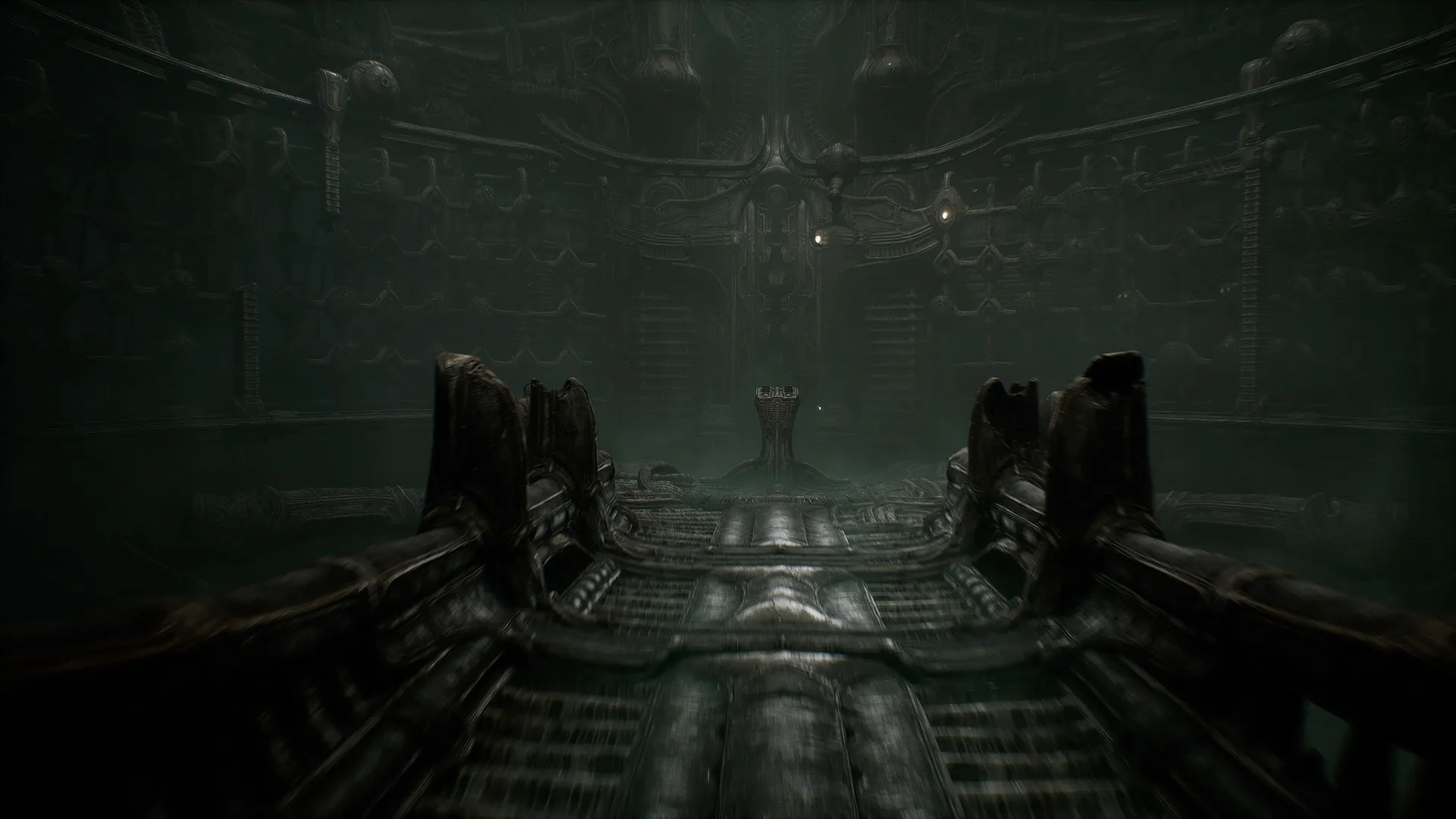
One of the biggest mistakes new players make in Scorn is treating it like a normal survival horror game. The world does not behave like a clean series of arenas and story checkpoints. Instead, it feels like a giant organism made of corridors, growths, and machinery that often serve multiple purposes at once. Doors may look like wounds, devices may resemble torture tools, and pathways can blend so naturally into the environment that they become easy to overlook.
Because of this, the first skill you need is not combat or puzzle logic. It is observation. Slow down whenever you enter a new area. Look at the walls, the floor, nearby machinery, and any unusual movement in the environment. Many progression clues are visual rather than verbal. A locked passage may be connected to a nearby organic mechanism. A seemingly decorative machine may actually be the key to opening the next route. The more you train yourself to read the environment carefully, the less time you will spend wandering in circles.
It also helps to accept that discomfort is intentional. Scorn wants you to feel lost, vulnerable, and physically disturbed by what surrounds you. Do not mistake that feeling for failure. Often, the game is working exactly as intended. Your job is not to rush through the discomfort, but to use it as a signal to pay closer attention. Once you stop resisting the game’s mood and start reading it, the world becomes far more understandable.
Learning How to Explore Without Missing Progression Paths
Exploration in Scorn is rarely about collecting dozens of optional items or uncovering bright map markers. It is about understanding spatial relationships and recognizing where your interaction points actually matter. The game’s environments often loop back on themselves or contain multiple mechanical stations connected to a central objective. If you try to brute-force your way through without building a mental map, you can waste a lot of time.
A smart way to explore is to treat each new zone like a puzzle hub. First, identify all visible exits, locked doors, active machines, and unusual structures. Then begin testing interactions one by one. When something does not work immediately, remember it and move on instead of assuming it is irrelevant. In Scorn, many devices only make sense after another part of the area has been activated. Revisiting earlier machines after a new event often reveals the intended path forward.
You should also move with purpose rather than panic. The world is oppressive enough to make players rush, especially when enemies appear or the environment becomes more disturbing. But rushing is exactly how you miss control panels, take bad damage, or waste precious resources. Calm, deliberate exploration is safer and more efficient. In Scorn, hesitation can feel frightening, but reckless speed is often worse.
Good exploration habits in Scorn
Study the whole room before interacting with anything
Remember machines that seem inactive
Revisit old paths after major changes
Check side angles and recessed spaces carefully
Solving Environmental Puzzles Without Overcomplicating Them
Scorn’s puzzles are often unsettling because they feel physical and invasive, but their logic is usually grounded in observation and sequence rather than abstract complexity. The game rarely expects random guessing. Instead, it wants you to understand how parts of a grotesque system connect. If a puzzle feels impossible, the usual problem is not that the solution is too obscure. It is that you have missed a visual clue, misunderstood the function of a machine, or approached the puzzle before the area was fully explored.
When facing a puzzle, begin by identifying what the end goal appears to be. Are you trying to open a passage, move an object, align a mechanism, or retrieve a biological key? Once that goal is clear, look for all the devices in the room that could contribute to it. Scorn often builds puzzles in stages, where one machine prepares an object, another repositions it, and a final device completes the process. Thinking in steps makes the logic much easier to follow.
It is also important not to overread the symbolism while solving. The world is full of body horror and disturbing imagery, but puzzle solutions are generally practical. A rail mechanism is still a rail mechanism, even if it looks like a spinal column. A locking device still functions like a lock, even if it opens through flesh-like movement. The aesthetic can be overwhelming, but the structure underneath is usually clear if you strip away the horror and focus on function.
A reliable puzzle approach
Identify the obvious blocked objective
Find every nearby interaction point
Test which machine changes the environment
Look for sequence, not randomness
Managing Early Encounters and Knowing When to Avoid Combat
Scorn is not a power fantasy. Combat exists, but it is deliberately awkward, tense, and limited. Early on, that can make players think they should avoid every encounter completely, but the better rule is more specific: fight only when necessary and only when the odds are acceptable. Some enemies can be bypassed, some are better avoided until you understand the area, and some must be dealt with because they block safe movement.
In the early game, your lack of resources makes every encounter meaningful. Ammunition is not plentiful, healing is scarce, and your weapons do not always feel reliable under pressure. Because of that, positioning matters as much as firepower. If an enemy is patrolling in an area you only need to cross once, it may be smarter to wait, slip around it, and conserve resources. If an enemy is controlling a narrow corridor that you will revisit multiple times, clearing it may be worth the cost.
You should also understand that Scorn’s combat is designed to make you feel exposed. Reload windows, weapon spacing, and enemy movement can all create panic. The way around that is not aggression. It is control. Fight from angles that give you room to back away. Avoid getting trapped in tight corners. Watch enemy patterns instead of firing immediately in fear. Scorn punishes desperation, but it rewards players who stay steady even when everything around them looks grotesque and wrong.
Mastering Your Weapons and Using Them With Intention
Weapons in Scorn are tools of survival, not toys for domination. Each one has a place, but none of them excuse careless play. Because ammunition is limited and enemy encounters are often tense, you need to think of every shot as a decision rather than a habit. This is especially true in sections where multiple threats can appear in close succession, turning poor resource use into a bigger problem later.
Your early weapon options are often best used at close or controlled ranges, where accuracy and timing matter more than volume. Missing shots hurts in Scorn because each miss is not just lost ammo. It is lost future safety. If a target is moving unpredictably or is too far for a clean hit, reposition first. A better angle is usually more valuable than a rushed attack. This simple discipline keeps your supplies alive much longer.
As you gain stronger weapons, the temptation is to become bolder. That helps in some situations, especially against tougher threats, but the same principle still applies: use the right tool for the right target. Do not spend high-value shots on weak enemies you could avoid or finish more efficiently. Do not unload in panic when one precise hit or a smart retreat would do the job. The players who handle Scorn best are not the ones firing the most. They are the ones making each attack count.
Weapon discipline matters because
Ammo is limited and not always easy to replace
Fights can chain together unexpectedly
Bad shots increase pressure later
Strong weapons are most useful when saved for real threats
Protecting Your Health and Treating Healing as a Strategy
Healing in Scorn is not something you should use casually. Because health recovery is limited, every chunk of damage matters, and every healing decision should be weighed against what may come next. This creates a very different rhythm from games where you can simply heal after every messy encounter. In Scorn, taking damage is not just a temporary setback. It can shape your confidence, your route choices, and your willingness to engage future enemies.
One of the smartest habits you can build is damage prevention through movement and pacing. Do not stand too close to enemies unless your weapon and timing demand it. Do not rush blind into narrow passages where something may be waiting. Do not stay committed to a bad position once a fight starts going wrong. Preserving health usually begins before you are hurt. It comes from cleaner decisions, safer spacing, and better awareness.
When you do heal, ask yourself whether you are stabilizing for a difficult section or simply erasing the consequences of impatience. The difference matters. If a major encounter, puzzle gauntlet, or unfamiliar area is ahead, healing may be the smart investment. If you are in a relatively calm section and can still survive one or two mistakes, conserving that recovery may be wiser. Scorn feels harsher when played reactively. It becomes more manageable when healing is treated as part of planning.
Reading Enemy Behavior and Staying Calm Under Pressure
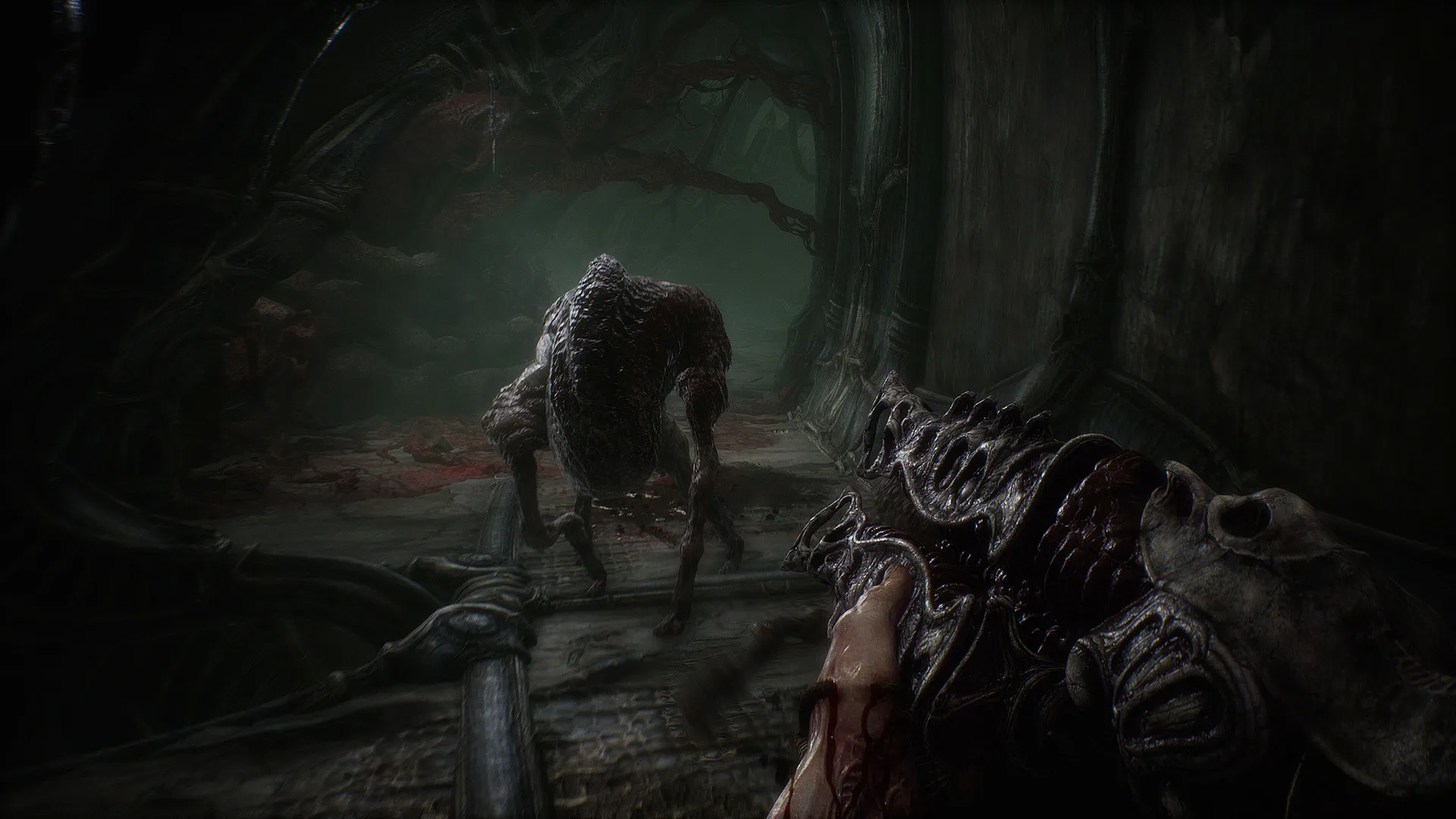
Enemies in Scorn are threatening not only because of damage, but because of how unnatural and unpredictable they feel when first encountered. Their designs are grotesque, their movement can be unsettling, and the game’s soundscape makes every approach feel more dangerous. That psychological pressure causes a lot of player mistakes. The good news is that most enemies become far more manageable once you stop reacting emotionally and start studying their behavior.
The first thing to watch is movement pattern. Does the enemy charge quickly, hesitate before attacking, patrol predictably, or pressure you only when close? Once you understand that pattern, you can choose the right response. Some enemies are best handled with quick bursts of force before backing away. Others are better avoided entirely if space allows. The real danger usually comes from making the wrong choice too soon, before you have read what the enemy is actually doing.
Sound also matters more than many players realize. Scorn’s audio design is oppressive, but it is also informative. Mechanical groans, enemy shifts, wet movements, and nearby activity often tell you something before you see it clearly. Listening carefully helps you avoid walking blindly into danger and gives you time to prepare your weapon or movement. In a game this tense, a second of preparation can mean everything.
Stay calm in combat by focusing on
Enemy distance
Attack timing
Retreat space
Ammo count
Nearby obstacles
Navigating the Mid-Game When Pressure Starts to Build
The mid-game is where Scorn often feels most oppressive. By this point, the environments have become more elaborate, the imagery more intense, and the pressure more constant. You are no longer just figuring out the game’s language. You are being tested on whether you can keep reading that language while managing combat, discomfort, and limited resources at the same time.
This is where pacing becomes essential. The worst thing you can do in Scorn’s mid-game is let tension control your tempo. If a section feels overwhelming, slow yourself down deliberately. Re-check your route. Look at your remaining health and ammo. Ask whether an enemy really needs to die or whether you are trying to remove it just because it scares you. Mid-game mistakes often come from emotional fatigue rather than lack of skill. The player gets tired of being unsettled and starts forcing progress.
You should also become more thoughtful about revisiting spaces. Scorn sometimes uses backtracking in ways that make familiar areas feel newly dangerous or newly important. What looked empty before may now contain a threat. What looked irrelevant before may now be the machine you needed all along. Mid-game survival depends on staying mentally flexible. Never assume you fully understand a space just because you have been there once.
Understanding Progression Through Body Horror and Transformation
One of the most unusual things about Scorn is how progression is tied not just to level design, but to bodily transformation, suffering, and invasive interaction with the world. The game constantly blurs the line between tool and wound, growth and decay, movement and mutilation. This is not just visual style. It affects how you emotionally process progression itself. Advancing often feels painful, compromised, or morally unclear.
To handle this well as a player, it helps to mentally separate discomfort from confusion. A moment may feel horrible, but that does not mean it lacks purpose. Often, these sequences mark major transitions in the game’s structure or your relationship to the environment. Machines that once seemed external may become intimate. Obstacles that looked static may suddenly become part of your body’s struggle through the world. Recognizing this pattern helps you stay grounded when the game becomes more intense.
It also helps to avoid expecting conventional reward loops. Scorn rarely says, “Good job, here is a comforting victory state.” Progress often feels ugly. Your reward is access, understanding, and continuation, not relief. Once you accept that, the game becomes easier to appreciate and easier to navigate. You stop waiting for reassurance and start focusing on forward momentum, even when that momentum is horrifying.
Preparing for the Final Stretch and Conserving What Matters
Late-game Scorn demands patience more than ever. By this point, you have seen enough of the world to understand its rhythms, but the game has likely worn you down psychologically. That fatigue makes it easy to play sloppily, especially if you feel close to the end and want to push through quickly. Resist that urge. The final sections can punish complacency hard.
Your goal in the late game is controlled conservation. Save healing when your current condition is still workable. Avoid unnecessary fights whenever possible. Use stronger weapons only when lower-risk solutions are unavailable. Pay extra attention to environmental storytelling, because the game’s last stretches often communicate through visual escalation rather than obvious direction. Small clues about where to go or what to interact with become even more important when the world is at its most chaotic.
You should also expect emotional intensity to increase. The late game in Scorn is not interested in making you comfortable before the credits. If anything, it becomes more invasive and more unsettling. The best way to handle that is to stay practical. Track your resources. Read the room. Clear only what you must. Move forward step by step. A grounded mindset makes the ending far more manageable, even if it remains disturbing.
Late-game priorities
Preserve healing for true emergencies
Do not waste strong ammo on avoidable fights
Re-check routes before committing
Stay focused on function, not panic
Turning Survival Into Understanding
Mastering Scorn is not just about reaching the end. It is about learning how to exist inside its world without letting the discomfort fully control you. That means developing a strange kind of balance: staying observant in horrific spaces, staying practical during body horror, and staying patient when the game refuses to explain itself directly. Once that balance clicks, Scorn becomes much less frustrating and much more fascinating.
You begin to notice how elegantly the world is designed beneath all the flesh and machinery. Spaces connect with intention. Puzzles teach you how the environment thinks. Enemies reinforce tension rather than simply blocking progress. Even the most disturbing sequences start to feel meaningful rather than random. This does not make the world less grotesque, but it does make you stronger inside it. You are no longer just enduring Scorn. You are reading it.
That is the real transformation the game offers. Not comfort, not triumph in the traditional sense, but understanding earned through patience. The player who succeeds in Scorn is not the one who rushes, fights everything, or demands immediate clarity. It is the one who observes closely, conserves carefully, and keeps moving through the nightmare with purpose.
Conclusion
Scorn is at its best when approached slowly, thoughtfully, and without the expectation that it will behave like a conventional horror game. Its strength lies in how completely it merges atmosphere, puzzle design, combat tension, and grotesque world-building into one unified experience. To survive it, you need more than aim or courage. You need discipline, observation, and the ability to stay calm inside one of gaming’s most disturbing environments.
By learning to read the biomechanical world carefully, solve puzzles through function rather than panic, avoid unnecessary combat, manage health and ammo with intention, and stay grounded during the game’s escalating horror, you give yourself the best possible chance of making it through. Scorn is cruel, strange, and deeply uncomfortable, but it is also precise. Meet it on those terms, and the nightmare becomes far more navigable.